 CHART
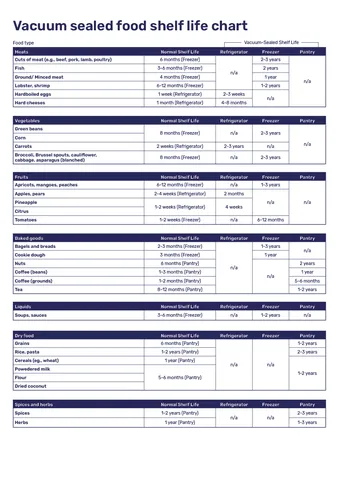
Free Vacuum-Sealed Food Shelf-Life Chart
Free vacuum-sealed food shelf-life chart and VP/MAP guide. Master UK FSA 10-day rules, botulism barrier controls, and sous-vide chilling standards.
Under UK Food Standards Agency (FSA) regulations, vacuum-packed (VP) and modified atmosphere packed (MAP) chilled foods must be assigned a maximum shelf life of 10 days at 3°C to 8°C unless specific controlling factors against non-proteolytic Clostridium botulinum are applied (e.g., heating to 90°C for 10 minutes, pH <= 5.0, or salt >= 3.5%).
Walk-In Cooler & Commercial Fridge Food Storage Shelf Chart
Eliminate drip cross-contamination by organising walk-in chillers and catering upright refrigerators according to official FSA vertical shelf rules. Search any food ingredient to find its mandatory shelf tier.
Never place food containers or crates directly on the floor. Maintain at least 15cm off the floor on stainless shelving or plastic dunnage racks.
Leave a 5cm gap between stored goods and insulated walls to allow constant cold air convection and eliminate warm ambient pockets.
Never stack boxes directly in front of the blower coil or evaporator fans. Blocking airflow triggers compressor strain and temperature spikes.
Walk-In Cooler Shelf Storage Hierarchy
Mandatory Vertical Storage Order: Top (Ready-to-Eat) to Bottom (Raw Biohazards)
Top Shelf: Ready-to-Eat (RTE) & Cooked Produce
Required Cooking Lethality: Zero cooking step before service (ready to serve)- Cooked batch dishes, stews, and prepped pasta
- Ready-to-eat salads, washed lettuce, cut tomatoes
- Dairy products: milk, cheeses, butter, yoghurts
- Cooked deli meats, ham, roast beef slices
- Pastries, desserts, cream cakes, and sauces
Must be placed on the uppermost shelves to completely eliminate the possibility of any raw juices or dirty water dripping onto ready-to-consume food.
Second Shelf: Whole Raw Fish & Shellfish
Required Cooking Lethality: ≥ 63°C (Minimum commercial cooking lethality)- Whole raw salmon, sea bass, and cod fillets
- Raw king prawns, squid, scallops, and crab meat
- Clean fresh seafood stored in drainage pans with flake ice
Raw fish carries lower bacterial load than red meats or poultry, requiring a lower thermal lethality threshold (63°C). Juices must never drip on cooked foods.
Third Shelf: Whole Cuts of Raw Beef, Lamb & Pork
Required Cooking Lethality: ≥ 70°C for 2 mins (or searing intact muscle surface)- Whole raw beef steaks, ribeye, and sirloin joints
- Whole pork loins, pork chops, and gammon
- Whole legs of lamb, lamb racks, and mutton cuts
Pathogens (such as E. coli) reside primarily on the outer surfaces of whole muscle meat. Kept above minced meats because whole meat juices carry lower systemic spore loads.
Fourth Shelf: Raw Minced Meats & Ground Sausages
Required Cooking Lethality: ≥ 75°C for 30s (82°C Scotland)- Raw minced beef, burger patties, and steak mince
- Raw pork sausages, sausage meat, and black pudding mix
- Formed raw kebabs, koftas, and minced lamb batches
Grinding mixes surface bacteria throughout the meat interior. High drip fluid volume requires heavy leakproof containment above poultry.
Bottom Shelf: Raw Poultry & Unwashed Root Vegetables
Required Cooking Lethality: ≥ 75°C for 30s (82°C in Scotland) throughout thermal centre- Raw whole chickens, turkey crowns, and duck fillets
- Raw chicken wings, thighs, and diced poultry meat
- Unwashed root vegetables: sacks of potatoes, muddy leeks, and carrots
Raw poultry carries high rates of Campylobacter and Salmonella; farm soil contains Bacillus cereus and Clostridium spores. Must strictly occupy the lowest tier so spills never touch other items.
How to Implement the Vacuum-Sealed Food Shelf-Life Chart in Your Commercial Kitchen
Practical due diligence procedures, regulatory compliance steps, and EHO audit verification guidelines for UK hospitality businesses.
UK Statutory Due Diligence Framework
Under Section 21 of the Food Safety Act 1990, a food business operator has a defense of due diligence if they prove that all reasonable precautions were taken and all due diligence was exercised to prevent food safety offenses.
Documented logs like the Vacuum-Sealed Food Shelf-Life Chart provide contemporaneous proof of monitoring required by Regulation (EC) No 852/2004 (retained UK law). Local council Environmental Health Officers (EHO) evaluate these records when scoring the "Confidence in Management" category of the Food Hygiene Rating Scheme (FHRS).
Official FSA Record-Keeping Guidance & Due Diligence
Under UK Food Standards Agency (FSA) Safer Food, Better Business (SFBB) standards and Article 5 of Regulation (EC) No 852/2004, food business operators are required to maintain contemporaneous, accurate operational records.
- Contemporaneous logging: Kitchen logs must reflect actual checks performed during opening, active service, and closing rather than retrospective estimates.
- Corrective action logs: Whenever a critical limit is breached, document the specific corrective measure taken (e.g. food discarded, chilled, or reheated) with staff initials.
- Statutory due diligence defense: Retaining completed daily sheets for a minimum of 6 to 12 months supports the statutory defense under Section 21 of the Food Safety Act 1990. Official guidance is available at food.gov.uk.
Step-by-Step Operational Routine
Operational Step 1
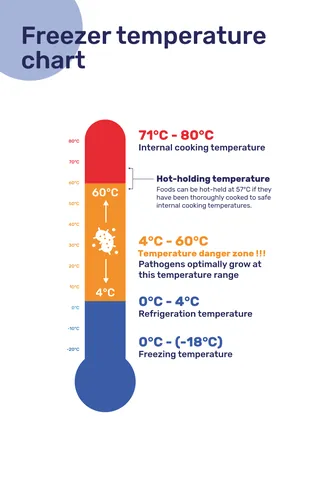
Verify walk-in and drawer refrigerators storing vacuum-packed foods operate strictly below 3°C (or under 8°C).
Operational Step 2
Apply the statutory UK FSA 10-day maximum shelf life limit to all vacuum-sealed fresh meats and cooked dishes.
Operational Step 3
To extend shelf life beyond 10 days, substantiate validated barriers: thermal cook (90°C for 10m), pH <= 5.0, or salt >= 3.5%.
Operational Step 4
Apply water-resistant tamper-evident labels displaying packaging date, batch lot, and use-by date.
Procedures align with UK Food Standards Agency (FSA) Safer Food, Better Business (SFBB) catering guidance and the Food Information Regulations 2014. Review official advice at food.gov.uk.
Frequently Asked Questions
Common questions about UK kitchen compliance, record keeping, and EHO audits.
All temperatures, microbial lethality pairs, and critical limits on this page have been verified against primary statutory documents issued by the UK Food Standards Agency (FSA), Food Standards Scotland (FSS), Regulation (EC) No 852/2004, and US FDA/USDA guidelines.
These templates, checklists, and calculators are food-safety management tools designed to assist UK food business operators (FBOs) in maintaining organised kitchen records and internal procedures. They do not constitute legal advice and using them does not guarantee compliance with UK food law or a five-star food hygiene rating.
Commercial Kitchen Food Cooling and Temperature Limits Guide
Read our in-depth guidance on UK Food Standards Agency inspection procedures, staff training, and compliance routines.