- What is SFBB (Safer Food, Better Business)?
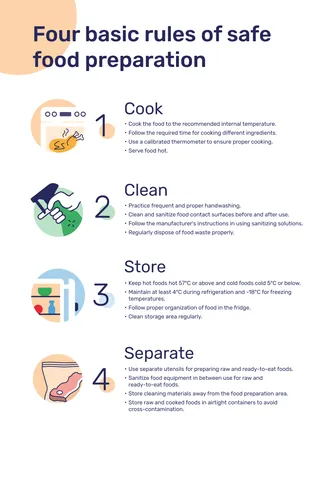
- Safer Food, Better Business (SFBB) is a practical food safety management pack developed by the UK Food Standards Agency (FSA). It helps small catering and retail businesses comply with food hygiene regulations through documented procedures across cooking, cleaning, chilling, cross-contamination, and daily opening/closing checks.
 CHECKLIST
Free Restaurant Inventory Template Guide
Track commercial kitchen food stock, par levels, and inventory costs. Free customisable restaurant inventory sheet covering cold storage and dry stock.
A restaurant inventory template provides a systematic spreadsheet and digital count sheet for auditing food, beverage, and cleaning stock across commercial food establishments. It tracks inventory on hand, unit costs, par levels, usage rates, and food cost variances across walk-in chillers, deep freezers, dry storage, and bar cellars.
Restaurant Inventory Template
Real-time digital inspection log. Sign off checks and export directly for local authority inspections.
UK Food Standards Agency (FSA) regulations require kitchen surface sanitisers to remain visibly wet on food-contact counters for the certified dwell time (typically 30 to 60 seconds) to destroy 99.999% of bacteria.
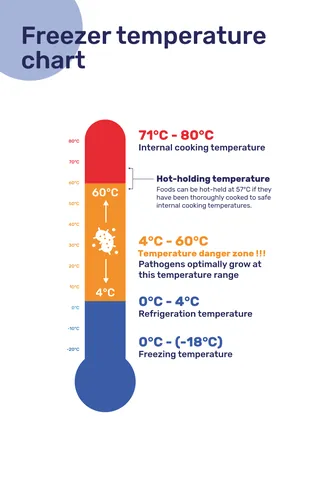
1. Calibrated Probe Temperature Record
| Equipment / Product | Target Limit | Log Time | Probe Reading | Status | Initial |
|---|---|---|---|---|---|
| <= 4°C | |||||
| <= 5°C | |||||
| <= -18°C | |||||
| >= 63°C | |||||
| >= 75°C |
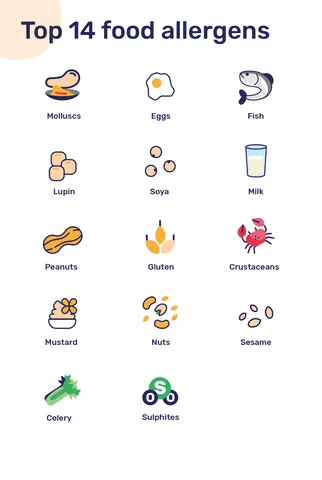
2. Mandatory HACCP & Food Hygiene Checks
How to Implement the Restaurant Inventory Template in Your Commercial Kitchen
Practical due diligence procedures, regulatory compliance steps, and EHO audit verification guidelines for UK hospitality businesses.
UK Statutory Due Diligence Framework
Under Section 21 of the Food Safety Act 1990, a food business operator has a defense of due diligence if they prove that all reasonable precautions were taken and all due diligence was exercised to prevent food safety offenses.
Documented logs like the Restaurant Inventory Template provide contemporaneous proof of monitoring required by Regulation (EC) No 852/2004 (retained UK law). Local council Environmental Health Officers (EHO) evaluate these records when scoring the "Confidence in Management" category of the Food Hygiene Rating Scheme (FHRS).
Official FSA Record-Keeping Guidance & Due Diligence
Under UK Food Standards Agency (FSA) Safer Food, Better Business (SFBB) standards and Article 5 of Regulation (EC) No 852/2004, food business operators are required to maintain contemporaneous, accurate operational records.
- Contemporaneous logging: Kitchen logs must reflect actual checks performed during opening, active service, and closing rather than retrospective estimates.
- Corrective action logs: Whenever a critical limit is breached, document the specific corrective measure taken (e.g. food discarded, chilled, or reheated) with staff initials.
- Statutory due diligence defense: Retaining completed daily sheets for a minimum of 6 to 12 months supports the statutory defense under Section 21 of the Food Safety Act 1990. Official guidance is available at food.gov.uk.
Step-by-Step Operational Routine
Operational Step 1
Organize stock sheet by physical location: mirror the layout of dry storage shelves, walk-in chillers (0-5°C), deep freezers (-18°C), and bar storerooms.
Operational Step 2
Count inventory consistently: conduct physical inventory counts at the same time each week (e.g. Sunday night after closing or Monday morning before deliveries).
Operational Step 3
Record standard units of measure: log items in unambiguous inventory units (e.g. kilograms for meat, litres for milk, cases for canned produce).
Operational Step 4
Reconcile against POS depletion data: compare physical ending inventory against expected theoretical inventory calculated by POS recipe sales.
Operational Step 5
Calculate food cost variance and waste: identify shrinkage, over-portioning, or inventory spoilage and adjust future purchasing orders accordingly.
Procedures align with UK Food Standards Agency (FSA) Safer Food, Better Business (SFBB) catering guidance and the Food Information Regulations 2014. Review official advice at food.gov.uk.
Frequently Asked Questions
Common questions about UK kitchen compliance, record keeping, and EHO audits.
All temperatures, microbial lethality pairs, and critical limits on this page have been verified against primary statutory documents issued by the UK Food Standards Agency (FSA), Food Standards Scotland (FSS), Regulation (EC) No 852/2004, and US FDA/USDA guidelines.
These templates, checklists, and calculators are food-safety management tools designed to assist UK food business operators (FBOs) in maintaining organised kitchen records and internal procedures. They do not constitute legal advice and using them does not guarantee compliance with UK food law or a five-star food hygiene rating.
Mastering Food Cost Percentage: Commercial Kitchen Calculator
Read our in-depth guidance on UK Food Standards Agency inspection procedures, staff training, and compliance routines.