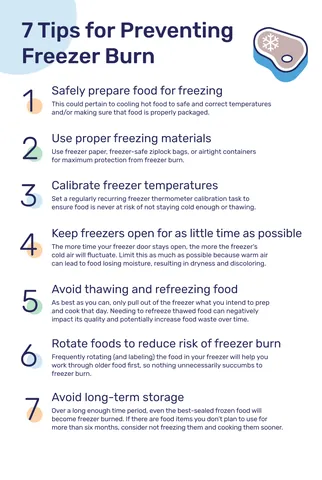
 POSTER
Free Freezer Burn Prevention Guide
Commercial kitchen freezer burn prevention guide. Master vacuum sealing, airtight containers, continuous -18°C controls, and FIFO stock rotation.
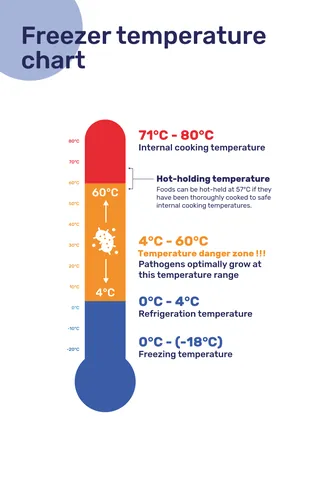
Freezer burn occurs when moisture sublimates from frozen food surfaces, leaving dry, oxidized, discoloured patches. Commercial kitchens prevent freezer burn by using moisture-vapour-proof vacuum packaging, eliminating interior headspace air, maintaining steady -18.0°C temperatures without thermal cycling, and adhering to strict FIFO storage rotation.
Commercial Freezer Temperature Log Sheet & Chart
Record daily AM and PM freezer probe readings, monitor automatic defrost cycles, and produce audit-ready Food Standards Agency (FSA) compliance sheets. Includes automated corrective action triggers and probe calibration verification.
Active Unit: Walk-in Deep Freezer (Main)
Statutory requirement: Check morning opening & evening closing. Target: ≤ -18.0°C.
| Day | AM Temp (°C) | AM Init | PM Temp (°C) | PM Init | FSA Compliance Status | Notes / Observations |
|---|---|---|---|---|---|---|
| Monday | -19.5°C | JD | -18.8°C | MR | AM: Compliant (≤ -18°C)PM: Compliant (≤ -18°C) | |
| Tuesday | -19.5°C | JD | -18.8°C | MR | AM: Compliant (≤ -18°C)PM: Compliant (≤ -18°C) | |
| Wednesday | -19.5°C | JD | -18.8°C | MR | AM: Compliant (≤ -18°C)PM: Compliant (≤ -18°C) | |
| Thursday | -19.5°C | JD | -18.8°C | MR | AM: Compliant (≤ -18°C)PM: Compliant (≤ -18°C) | |
| Friday | -19.5°C | JD | -18.8°C | MR | AM: Compliant (≤ -18°C)PM: Compliant (≤ -18°C) | |
| Saturday | -19.5°C | JD | -18.8°C | MR | AM: Compliant (≤ -18°C)PM: Compliant (≤ -18°C) | |
| Sunday | -19.5°C | JD | -18.8°C | MR | AM: Compliant (≤ -18°C)PM: Compliant (≤ -18°C) |
I confirm that all freezer temperatures were verified daily by trained food handlers, recorded on calibrated instrumentation, and appropriate corrective actions were executed for any deviation above -18.0°C.
EHO Corrective Action Log
Mandatory under Section 21 of the Food Safety Act 1990 whenever temperatures rise above -18.0°C.
| Date / Time | Equipment | Temp | Identified Cause | Corrective Action Taken | Sign | Status | |
|---|---|---|---|---|---|---|---|
| 2026-11-02 | Cook Line Under-Counter Freezer | -14.2°C | Scheduled 30-min auto-defrost cycle in progress during afternoon rush. | Re-probed after 45 minutes; core temp stabilised at -18.6°C. Door seals verified airtight. | JD |
Monthly Probe Thermometer Calibration Check
UK FSA standard: Calibrate using crushed ice water (0.0°C) and boiling water (100.0°C). Tolerance: ±0.5°C.
How to Implement the Prevent Freezer Burn Poster in Your Commercial Kitchen
Practical due diligence procedures, regulatory compliance steps, and EHO audit verification guidelines for UK hospitality businesses.
UK Statutory Due Diligence Framework
Under Section 21 of the Food Safety Act 1990, a food business operator has a defense of due diligence if they prove that all reasonable precautions were taken and all due diligence was exercised to prevent food safety offenses.
Documented logs like the Prevent Freezer Burn Poster provide contemporaneous proof of monitoring required by Regulation (EC) No 852/2004 (retained UK law). Local council Environmental Health Officers (EHO) evaluate these records when scoring the "Confidence in Management" category of the Food Hygiene Rating Scheme (FHRS).
Official FSA Record-Keeping Guidance & Due Diligence
Under UK Food Standards Agency (FSA) Safer Food, Better Business (SFBB) standards and Article 5 of Regulation (EC) No 852/2004, food business operators are required to maintain contemporaneous, accurate operational records.
- Contemporaneous logging: Kitchen logs must reflect actual checks performed during opening, active service, and closing rather than retrospective estimates.
- Corrective action logs: Whenever a critical limit is breached, document the specific corrective measure taken (e.g. food discarded, chilled, or reheated) with staff initials.
- Statutory due diligence defense: Retaining completed daily sheets for a minimum of 6 to 12 months supports the statutory defense under Section 21 of the Food Safety Act 1990. Official guidance is available at food.gov.uk.
Step-by-Step Operational Routine
Operational Step 1
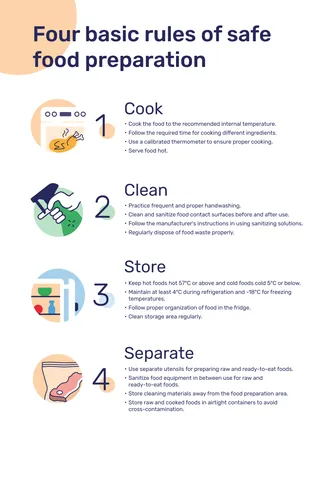
Vacuum-seal raw meats and prepared batches in heavy-duty food-grade pouches.
Operational Step 2
Press out all excess air before sealing zipper bags or plastic wrap barriers.
Operational Step 3
Maintain sub-zero storage at -18.0°C continuously, minimizing door opening times.
Operational Step 4
Rotate stock using First-In, First-Out (FIFO) standards with clear date labels.
Operational Step 5
Chill foods thoroughly to 5.0°C before loading them into commercial freezers.
Procedures align with UK Food Standards Agency (FSA) Safer Food, Better Business (SFBB) catering guidance and the Food Information Regulations 2014. Review official advice at food.gov.uk.
Frequently Asked Questions
Common questions about UK kitchen compliance, record keeping, and EHO audits.
All temperatures, microbial lethality pairs, and critical limits on this page have been verified against primary statutory documents issued by the UK Food Standards Agency (FSA), Food Standards Scotland (FSS), Regulation (EC) No 852/2004, and US FDA/USDA guidelines.
These templates, checklists, and calculators are food-safety management tools designed to assist UK food business operators (FBOs) in maintaining organised kitchen records and internal procedures. They do not constitute legal advice and using them does not guarantee compliance with UK food law or a five-star food hygiene rating.
Commercial Kitchen Food Cooling & Temperature Guide
Read our in-depth guidance on UK Food Standards Agency inspection procedures, staff training, and compliance routines.