 CHART
Free HACCP Flow Chart Template & SOP
Free interactive HACCP flow chart template for catering. Map process steps, identify hazards, set Critical Control Points, and pass EHO audits.
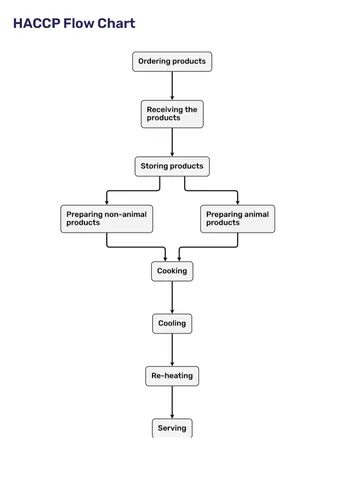
A HACCP flow chart is a linear process diagram mapping every operational stage in food preparation—from goods delivery receipt and storage to prep, cooking, holding, cooling, reheating, and service. It is a mandatory requirement under Codex Alimentarius Step 4 / Principle 1, providing the foundational framework for identifying hazards and establishing Critical Control Points.
Commercial Kitchen HACCP Food Flow Chart & CCP Process Map
Step through all 10 stages of the commercial kitchen food process flow. Inspect Critical Control Points (CCPs), statutory critical limits, monitoring procedures, and corrective action protocols. Print a landscape A4 compliance diagram.
Cooking & Core Thermal Lethality
Survival of vegetative food poisoning bacteria (Campylobacter, Salmonella, E. coli O157, Listeria).
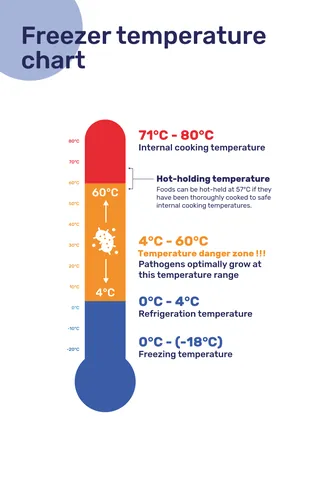
Core temperature: >= 75°C for 30 seconds (or 70°C for 2 min). Scotland: >= 82.0°C statutory.
Probe the thickest part of the product with calibrated digital needle thermometer for every batch.
Continue thermal cooking until probe confirms core has reached required temperature.
MASTER FOOD FLOW CHART
Regulation (EC) No 852/2004 Article 5 • Safer Food, Better Business (SFBB) Due Diligence
| Stage | Operational Process | CCP? | Critical Limit | Monitoring Frequency | Corrective Action |
|---|---|---|---|---|---|
| Stage 1 | Purchasing & Supplier Approval | PRP | Suppliers must be on the approved supplier register; delivery specifications verified. | Annual review of vendor food safety certification (BRCGS, SALSA, or local council rating >=4). | Suspend unapproved vendors immediately; reject unauthorized ingredient substitutions. |
| Stage 2 | Goods Inwards & Delivery Receipt | CCP 1 | Chilled foods: <= 5.0°C (legal max 8.0°C). Frozen foods: <= -18.0°C. Clean vehicle, sound packaging. | Probe representative delivery boxes using clean probe; check use-by dates and lot codes. | REJECT any delivery exceeding 8.0°C chilled or exhibiting signs of defrosting/damage. |
| Stage 3 | Cold, Frozen & Dry Storage | CCP 2 | Chillers: 1°C to 5°C. Freezers: <= -18°C. Dry store: clean, dry, stock raised >15cm off floor. | Inspect and log ambient appliance temperatures twice daily (AM and PM opening checks). | Service refrigeration thermostat; transfer foods to backup chiller if temp rises >8°C. |
| Stage 4 | Thawing & Controlled Defrosting | PRP | Defrost strictly inside commercial chiller (1°C–5°C) on bottom shelf in deep drip tray. Never ambient. | Probe center of defrosting joint to confirm zero ice crystals remain before cooking. | Extend defrost time under refrigeration; never thaw under warm standing water. |
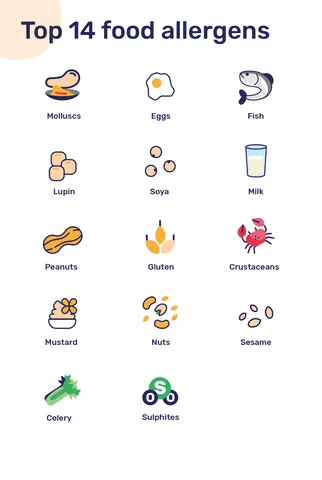
| Stage 5 | Food Preparation & Allergen Controls | PRP | Strict colour-coded chopping boards (Red, Yellow, Blue, Green, Purple); BS EN 1499 hand hygiene. | Continuous shift supervision; separate prep areas and dedicated sanitized utensils. | Discard contaminated ready-to-eat food immediately; re-sanitize affected prep benches. |
| Stage 6 | Cooking & Core Thermal Lethality | CCP 3 | Core temperature: >= 75°C for 30 seconds (or 70°C for 2 min). Scotland: >= 82.0°C statutory. | Probe the thickest part of the product with calibrated digital needle thermometer for every batch. | Continue thermal cooking until probe confirms core has reached required temperature. |
| Stage 7 | Commercial Hot-Holding Pass | CCP 4 | Hot food held at or above 63.0°C continuously. Maximum single 2-hour service exemption rule. | Probe hot-holding wells, bain-marie units, and carvery passes every 2 hours during service. | Reheat food once to >=75°C (82°C Scotland), or discard immediately if time exceeds 2 hours. |
| Stage 8 | Rapid Blast Chilling (Cook to Chill) | CCP 5 | Cool cooked food from 63°C down to 8°C or colder within 90 minutes maximum. | Record start cooling time, interim temperature at 45 mins, and final chilled temp at 90 mins. | Portion into shallow pans, use ice bath, or transfer to commercial blast chiller immediately. |
| Stage 9 | Reheating Cooked Foods | CCP 6 | Core temperature must achieve >= 75°C for 30s (Scotland: >= 82°C). Only reheat once. | Probe center of every reheated portion or bulk batch before plating or transfer to hot hold. | Discard food if it fails to reach 75°C. NEVER cool and reheat a second time. |
| Stage 10 | Plating, Packaging & Takeaway Delivery | PRP | Insulated delivery bags (hot foods >=63°C, cold foods <=8°C); allergen flags on containers. | Check dispatch temperatures; verify Natasha's Law PPDS label match before handover. | Repack in sanitized insulated bag; replace damaged containers before driver dispatch. |
How to Implement the Flow Chart in Your Commercial Kitchen
Practical due diligence procedures, regulatory compliance steps, and EHO audit verification guidelines for UK hospitality businesses.
UK Statutory Due Diligence Framework
Under Section 21 of the Food Safety Act 1990, a food business operator has a defense of due diligence if they prove that all reasonable precautions were taken and all due diligence was exercised to prevent food safety offenses.
Documented logs like the Flow Chart provide contemporaneous proof of monitoring required by Regulation (EC) No 852/2004 (retained UK law). Local council Environmental Health Officers (EHO) evaluate these records when scoring the "Confidence in Management" category of the Food Hygiene Rating Scheme (FHRS).
Official FSA Record-Keeping Guidance & Due Diligence
Under UK Food Standards Agency (FSA) Safer Food, Better Business (SFBB) standards and Article 5 of Regulation (EC) No 852/2004, food business operators are required to maintain contemporaneous, accurate operational records.
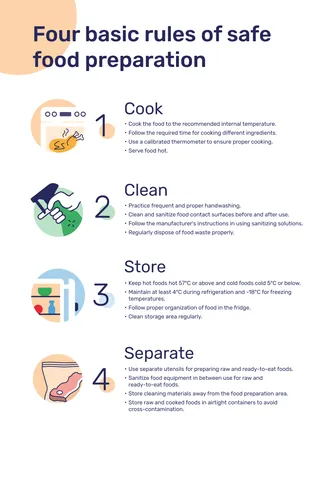
- Contemporaneous logging: Kitchen logs must reflect actual checks performed during opening, active service, and closing rather than retrospective estimates.
- Corrective action logs: Whenever a critical limit is breached, document the specific corrective measure taken (e.g. food discarded, chilled, or reheated) with staff initials.
- Statutory due diligence defense: Retaining completed daily sheets for a minimum of 6 to 12 months supports the statutory defense under Section 21 of the Food Safety Act 1990. Official guidance is available at food.gov.uk.
Step-by-Step Operational Routine
Operational Step 1
List every sequential step of food handling from raw ingredient supplier receipt through to customer service or dispatch.
Operational Step 2
Identify specific biological, chemical, physical, and allergen hazards associated with each individual process step.
Operational Step 3
Apply the Codex HACCP decision tree questions to determine whether each stage represents a Critical Control Point (CCP).
Operational Step 4
Establish validated critical limits, continuous monitoring protocols, and corrective actions for every identified CCP.
Procedures align with UK Food Standards Agency (FSA) Safer Food, Better Business (SFBB) catering guidance and the Food Information Regulations 2014. Review official advice at food.gov.uk.
Frequently Asked Questions
Common questions about UK kitchen compliance, record keeping, and EHO audits.
All temperatures, microbial lethality pairs, and critical limits on this page have been verified against primary statutory documents issued by the UK Food Standards Agency (FSA), Food Standards Scotland (FSS), Regulation (EC) No 852/2004, and US FDA/USDA guidelines.
These templates, checklists, and calculators are food-safety management tools designed to assist UK food business operators (FBOs) in maintaining organised kitchen records and internal procedures. They do not constitute legal advice and using them does not guarantee compliance with UK food law or a five-star food hygiene rating.
How to Write a HACCP Plan for UK Food Businesses Step-by-Step
Read our in-depth guidance on UK Food Standards Agency inspection procedures, staff training, and compliance routines.