- What is SFBB (Safer Food, Better Business)?
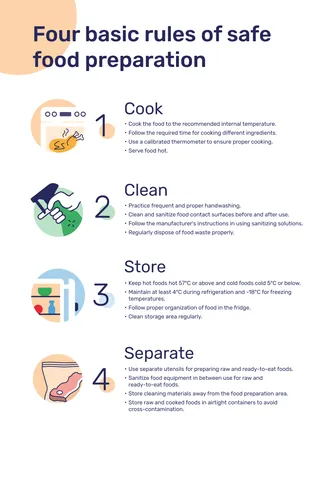
- Safer Food, Better Business (SFBB) is a practical food safety management pack developed by the UK Food Standards Agency (FSA). It helps small catering and retail businesses comply with food hygiene regulations through documented procedures across cooking, cleaning, chilling, cross-contamination, and daily opening/closing checks.
 LOG
Free Fridge Temperature Log Sheet
Download a free fridge temperature log sheet for UK restaurants and takeaways. Record 8°C chilled limits twice daily for EHO due diligence evidence.
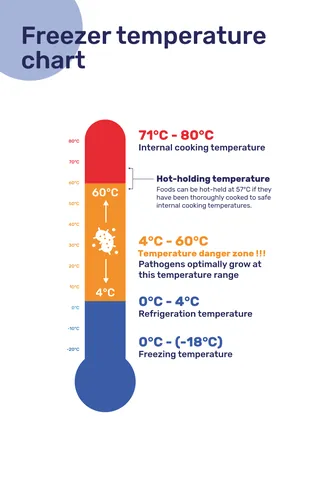
A commercial fridge temperature record sheet is a statutory monitoring log used to track chiller and refrigeration temperatures twice daily. Under the Food Hygiene (England) Regulations, commercial chilled food must remain at 8°C or colder (industry target 1°C–5°C) to prevent pathogenic bacterial proliferation and satisfy EHO inspection due diligence.
Commercial Fridge Temperature Record Sheet & EHO Due Diligence Log
Track twice-daily AM and PM temperature probe readings across all commercial refrigeration units. Automatically highlights statutory temperature excursions (> 8°C), logs corrective actions, and verifies monthly probe calibration.
| Refrigeration Unit | Target Range | Legal Max | AM Check (°C) | AM Status | PM Check (°C) | PM Status | Initials |
|---|---|---|---|---|---|---|---|
Walk-In Main Chiller (Cold Store) Walk-In Cold Room | 1.0°C – 4.0°C | ≤ 8°C | OPTIMAL | OPTIMAL | |||
Cookline Prep Saladette & Wells Under-Counter Prep Well | 2.0°C – 5.0°C | ≤ 8°C | OPTIMAL | OPTIMAL | |||
Dedicated Raw Meat Upright Chiller Upright Commercial Refrigerator | 0.0°C – 3.0°C | ≤ 5°C | OPTIMAL | OPTIMAL | |||
Fresh Fish & Seafood Storage Drawer Specialised Fish Chiller | 0.0°C – 2.0°C | ≤ 4°C | OPTIMAL | OPTIMAL | |||
Dairy & Dessert Service Chiller Display / Pass Fridge | 2.0°C – 5.0°C | ≤ 8°C | OPTIMAL | OPTIMAL |
Monthly Probe Thermometer Calibration Check (SFBB Mandatory)
Tolerance: ± 1.0°C RequiredCommercial Refrigerator Temperature Log
Mandatory Twice-Daily Temperature Monitoring Under UK Food Hygiene Legislation
| Unit Name | Target | Max Legal | AM (°C) | PM (°C) | Sign | Operational Notes / Defrost Cycle |
|---|---|---|---|---|---|---|
| Walk-In Main Chiller (Cold Store) | 1.0°C – 4.0°C | ≤ 8°C | 2.8°C | 3.4°C | JM | Defrost cycle completed normally at 05:00 |
| Cookline Prep Saladette & Wells | 2.0°C – 5.0°C | ≤ 8°C | 3.5°C | 4.6°C | JM | Lids kept closed between orders |
| Dedicated Raw Meat Upright Chiller | 0.0°C – 3.0°C | ≤ 5°C | 1.9°C | 2.3°C | SA | Bottom drip trays inspected and dry |
| Fresh Fish & Seafood Storage Drawer | 0.0°C – 2.0°C | ≤ 4°C | 0.8°C | 1.2°C | SA | Packed in fresh flake ice with drainage plug open |
| Dairy & Dessert Service Chiller | 2.0°C – 5.0°C | ≤ 8°C | 3.8°C | 4.1°C | JM | Stock rotated under FIFO date protocol |
- Re-probe Internal Food Centre: Check if air temperature reading was triggered by door opening during restocking. Probe internal temperature of high-risk food.
- 4-Hour Exemption Assessment: If food temperature has been between 8°C and 63°C for under 4 hours, immediately transfer food to a working backup chiller.
- Immediate Destruction: If high-risk food has exceeded 8°C for over 4 hours, condemn and discard into Category 3 food waste. Record weight and reasons in SFBB Diary.
- Refrigeration Service Call: Clean condenser coils, inspect door rubber gaskets, and contact refrigeration engineer.
Temperature Sheet
Real-time digital inspection log. Sign off checks and export directly for local authority inspections.
UK Food Standards Agency (FSA) regulations require kitchen surface sanitisers to remain visibly wet on food-contact counters for the certified dwell time (typically 30 to 60 seconds) to destroy 99.999% of bacteria.
1. Calibrated Probe Temperature Record
| Equipment / Product | Target Limit | Log Time | Probe Reading | Status | Initial |
|---|---|---|---|---|---|
| <= 4°C | |||||
| <= 5°C | |||||
| <= -18°C | |||||
| >= 63°C | |||||
| >= 75°C |
2. Mandatory HACCP & Food Hygiene Checks
How to Implement the Temperature Sheet in Your Commercial Kitchen
Practical due diligence procedures, regulatory compliance steps, and EHO audit verification guidelines for UK hospitality businesses.
UK Statutory Due Diligence Framework
Under Section 21 of the Food Safety Act 1990, a food business operator has a defense of due diligence if they prove that all reasonable precautions were taken and all due diligence was exercised to prevent food safety offenses.
Documented logs like the Temperature Sheet provide contemporaneous proof of monitoring required by Regulation (EC) No 852/2004 (retained UK law). Local council Environmental Health Officers (EHO) evaluate these records when scoring the "Confidence in Management" category of the Food Hygiene Rating Scheme (FHRS).
Official FSA Record-Keeping Guidance & Due Diligence
Under UK Food Standards Agency (FSA) Safer Food, Better Business (SFBB) standards and Article 5 of Regulation (EC) No 852/2004, food business operators are required to maintain contemporaneous, accurate operational records.
- Contemporaneous logging: Kitchen logs must reflect actual checks performed during opening, active service, and closing rather than retrospective estimates.
- Corrective action logs: Whenever a critical limit is breached, document the specific corrective measure taken (e.g. food discarded, chilled, or reheated) with staff initials.
- Statutory due diligence defense: Retaining completed daily sheets for a minimum of 6 to 12 months supports the statutory defense under Section 21 of the Food Safety Act 1990. Official guidance is available at food.gov.uk.
Step-by-Step Operational Routine
Operational Step 1
Label each commercial refrigerator, walk-in chiller, and sandwich prep counter with a unique number.
Operational Step 2
Take morning and afternoon readings using internal digital thermometers or calibrated needle probes.
Operational Step 3
Log the temperature reading, time, and staff initials immediately on the printable log sheet.
Operational Step 4
Apply corrective action if a chiller exceeds 8°C: verify probe, adjust thermostat, or relocate stock.
Operational Step 5
File completed sheets in the kitchen food safety compliance binder for EHO inspection review.
Procedures align with UK Food Standards Agency (FSA) Safer Food, Better Business (SFBB) catering guidance and the Food Information Regulations 2014. Review official advice at food.gov.uk.
Frequently Asked Questions
Common questions about UK kitchen compliance, record keeping, and EHO audits.
All temperatures, microbial lethality pairs, and critical limits on this page have been verified against primary statutory documents issued by the UK Food Standards Agency (FSA), Food Standards Scotland (FSS), Regulation (EC) No 852/2004, and US FDA/USDA guidelines.
These templates, checklists, and calculators are food-safety management tools designed to assist UK food business operators (FBOs) in maintaining organised kitchen records and internal procedures. They do not constitute legal advice and using them does not guarantee compliance with UK food law or a five-star food hygiene rating.
Commercial Kitchen Food Cooling & Temperature Limits Guide
Read our in-depth guidance on UK Food Standards Agency inspection procedures, staff training, and compliance routines.