 POSTER
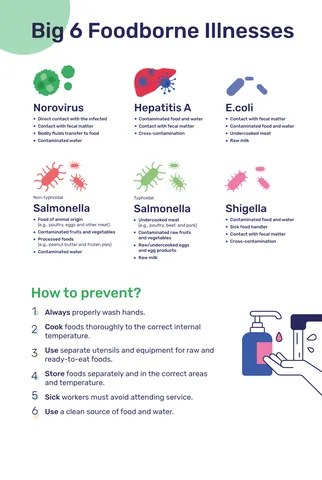
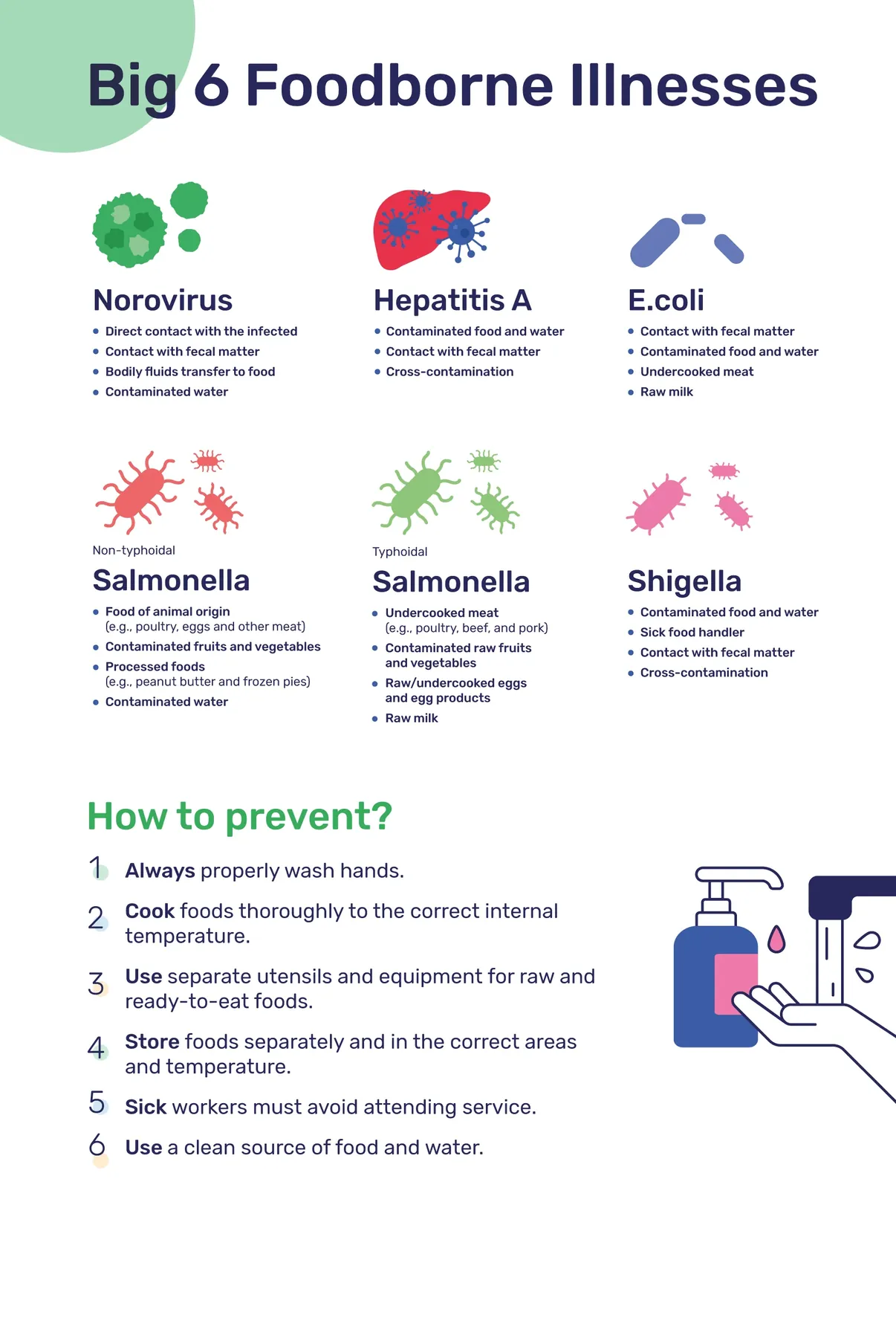
Free Big 6 Foodborne Illnesses Poster
Identify and prevent the Big 6 pathogens: Norovirus, Salmonella, E. coli, and more. Free foodborne illnesses chart with 48-hour exclusion rules.
The 'Big 6' foodborne illnesses refer to the six most highly infectious, easily transmissible foodborne pathogens recognized by food safety authorities (FSA and FDA): Norovirus, Non-typhoidal Salmonella, Salmonella Typhi, Shiga toxin-producing E. coli (STEC), Shigella spp., and Hepatitis A virus. Due to low infectious doses and severe health risks, food handlers diagnosed with or exhibiting symptoms of any Big 6 pathogen must be excluded from food operations for at least 48 hours symptom-free.
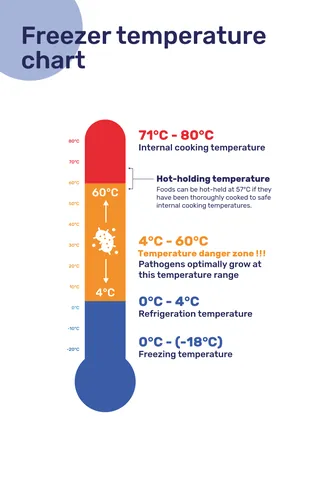
UK & EU Food Safety Temperature Reference Limits
Stops bacterial growth
Legal maximum 8°C
Max 2 hrs if below 63°C
Destroys pathogens
How to Implement the Big 6 Foodborne Illnesses in Your Commercial Kitchen
Practical due diligence procedures, regulatory compliance steps, and EHO audit verification guidelines for UK hospitality businesses.
UK Statutory Due Diligence Framework
Under Section 21 of the Food Safety Act 1990, a food business operator has a defense of due diligence if they prove that all reasonable precautions were taken and all due diligence was exercised to prevent food safety offenses.
Documented logs like the Big 6 Foodborne Illnesses provide contemporaneous proof of monitoring required by Regulation (EC) No 852/2004 (retained UK law). Local council Environmental Health Officers (EHO) evaluate these records when scoring the "Confidence in Management" category of the Food Hygiene Rating Scheme (FHRS).
Official FSA Record-Keeping Guidance & Due Diligence
Under UK Food Standards Agency (FSA) Safer Food, Better Business (SFBB) standards and Article 5 of Regulation (EC) No 852/2004, food business operators are required to maintain contemporaneous, accurate operational records.
- Contemporaneous logging: Kitchen logs must reflect actual checks performed during opening, active service, and closing rather than retrospective estimates.
- Corrective action logs: Whenever a critical limit is breached, document the specific corrective measure taken (e.g. food discarded, chilled, or reheated) with staff initials.
- Statutory due diligence defense: Retaining completed daily sheets for a minimum of 6 to 12 months supports the statutory defense under Section 21 of the Food Safety Act 1990. Official guidance is available at food.gov.uk.
Step-by-Step Operational Routine
Operational Step 1
Enforce mandatory staff symptom reporting: require immediate reporting of vomiting, diarrhoea, jaundice, sore throat with fever, or infected skin lesions.
Operational Step 2
Apply the 48-Hour Exclusion rule: exclude any food handler experiencing vomiting or diarrhoea for at least 48 hours after symptoms have completely cleared.
Operational Step 3
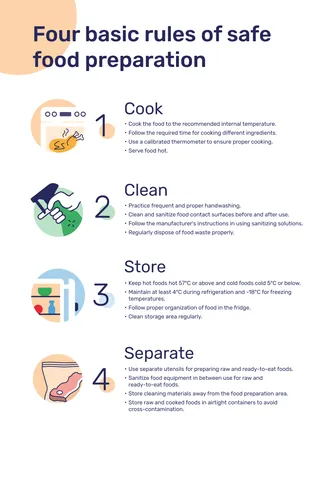
Achieve thermal kill limits: cook poultry and meat to an internal core temperature of at least 75°C for 30 seconds (or 70°C for 2 minutes) to destroy Salmonella and E. coli.
Operational Step 4
Prevent raw-to-ready cross-contamination: use dedicated colour-coded cutting boards (Red: raw meat, Yellow: cooked meat) and separate vacuum packaging machines.
Operational Step 5
Disinfect vomit and bodily fluid spills immediately: seal off area, wear PPE, and disinfect using chlorine bleach at 1000 ppm concentration to destroy Norovirus.
Procedures align with UK Food Standards Agency (FSA) Safer Food, Better Business (SFBB) catering guidance and the Food Information Regulations 2014. Review official advice at food.gov.uk.
Frequently Asked Questions
Common questions about UK kitchen compliance, record keeping, and EHO audits.
All temperatures, microbial lethality pairs, and critical limits on this page have been verified against primary statutory documents issued by the UK Food Standards Agency (FSA), Food Standards Scotland (FSS), Regulation (EC) No 852/2004, and US FDA/USDA guidelines.
These templates, checklists, and calculators are food-safety management tools designed to assist UK food business operators (FBOs) in maintaining organised kitchen records and internal procedures. They do not constitute legal advice and using them does not guarantee compliance with UK food law or a five-star food hygiene rating.
How to Get a 5-Star Food Hygiene Rating: UK EHO Checklist
Read our in-depth guidance on UK Food Standards Agency inspection procedures, staff training, and compliance routines.